Building tomorrow’s public health leaders
Undergraduate program transforms from groundbreaking initiative to thriving academic program
By Bob Cunningham
Photos by Dieu-Nalio Chery
When the University of Michigan School of Public Health designed its Undergraduate program, the goal was clear: Create a comprehensive educational pathway that could prepare students to address complex health challenges across diverse sectors.
Launched in 2017 to handle the growing demand for public health training among University of Michigan undergraduates, the program aims to equip students with interdisciplinary skills to tackle population health issues from multiple angles.
A vision for growth
Now, after eight years of growth and innovation, the program is poised for significant expansion. Director Emily Youatt envisions three transformative developments: growing the program to 500 students, launching the school’s first study abroad program in Ireland, and introducing new interdisciplinary minors that will attract students from across the university.
Central to this evolution is Youatt, a clinical associate professor of Health Behavior & Health Equity, who—along with a dedicated undergraduate education team—has been instrumental in shaping the program’s vision and trajectory.
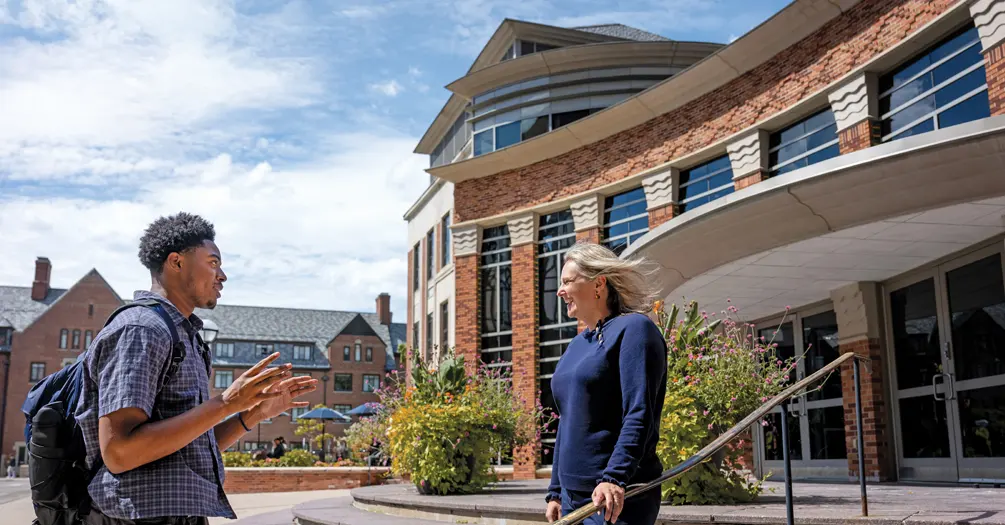
The program’s unique approach has distinguished itself by embracing the diverse interests and career aspirations of its students. From those planning clinical careers to future policymakers, from social workers to legal professionals, students have found common ground in public health training.
When our admissions recruiters connect with prospective undergraduate students, one of the things we emphasize is that we are eager to enroll students with a variety of interests and career goals.”
— Emily Youatt, director of the Undergraduate program
“We have students with wildly different goals and interests who all see value in public health training,” Youatt said.
The curriculum itself has evolved to meet contemporary challenges, most notably by introducing a mandatory three-credit health equity requirement. Despite current political pressures challenging the concept of equity, Michigan Public Health remains committed to this core principle.
“Health equity is foundational to public health and to the University of Michigan,” Youatt said.
Students can now choose from courses exploring racism in the US healthcare system, LGBTQ+ health, and health assets and challenges among specific vulnerable populations.
PROSPECTIVE STUDENT? Learn more about Michigan Public Health.
Research opportunities across disciplines
The program’s growth has been matched by the depth of research opportunities available to students. Approximately 80 different faculty members have worked with undergraduate students on independent studies, with nearly half engaging directly in research projects.
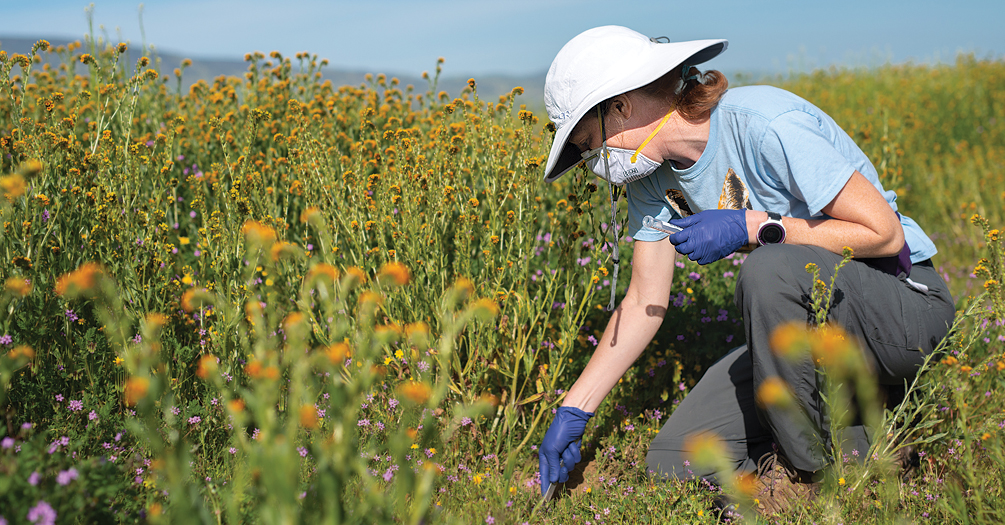
These research experiences span an impressive range of topics. Students have explored youth violence prevention, investigated the healing powers of art and music, studied women’s health, examined cross-cultural communication’s impact on health outcomes, and researched vaccination attitudes in Indonesia.
Students have also been active in local communities tackling public health challenges.
To understand the health needs of homeless and at-risk populations, public health students worked at the Shelter Association of Washtenaw County and with the House by the Side of the Road, an Ann Arbor-based organization that provides clothing and household goods to Washtenaw County residents.
Other students engaged in internships with local and federal agencies, including work with the Dearborn Department of Public Health and the US Environmental Protection Agency. Students have also earned academic credit while gaining exposure to clinical settings and community-based organizations.
This approach has translated into tangible career success. Graduates have found positions across various sectors, with the majority employed in the private sector. Companies such as Deloitte, Epic Systems, CVS Health and Blue Cross Blue Shield have welcomed Michigan Public Health graduates into roles ranging from project management to prevention specialists.
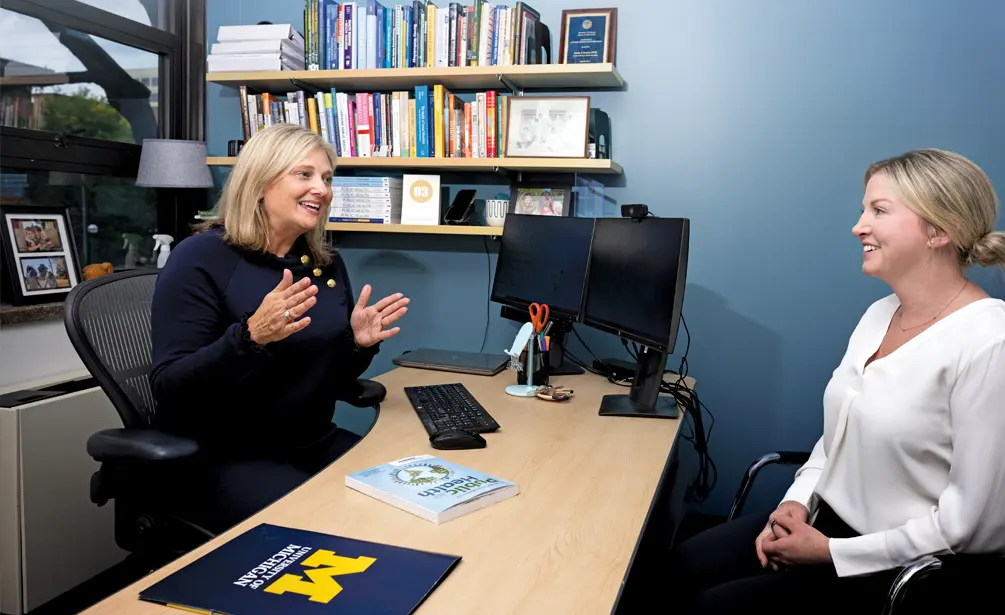
“When our admissions recruiters connect with prospective undergraduate students, one of the things we emphasize is that we are eager to enroll students with a variety of interests and career goals,” Youatt said. “Attracting students who intend to pursue clinical careers, graduate training in law or social work, or are keen to graduate and go directly into community-based work is integral to creating a robust classroom environment.”
It’s about cultivating a unique sense of community. Unlike large undergraduate colleges where students can feel anonymous, Michigan Public Health offers a more intimate educational experience.
“The majority of students in our program transfer from the College of Literature, Science and the Arts,” Youatt said. “This is a great educational setting, but it is easy for students there to feel like a small fish in a large pond. At the School of Public Health, our cohort model, curriculum structure and concentrated class locations create a profound sense of connection.”
This connection extends beyond social bonds. Students share a fundamental belief in health as a critical societal value, united by a collective commitment to creating systems that support healthier lives.
“Dr. Youatt was incredible. She provided guidance not only in my coursework but also in navigating the medical school application process. Public health helped me see the connection between healthcare systems and individual experiences.”
— Aparna Reddy, BA ’24, now a medical student at the Stanford University School of Medicine
It takes a village
Faculty play a crucial role in this ecosystem. According to Youatt, the program’s
faculty are its
“secret sauce.” They are invested in student success, generous with research opportunities
and committed to mentorship.
“Our faculty understand how critical mentorship is for undergraduate students,” she said. “They know how important it is to encourage, inspire and show students what’s possible.”
Aparna Reddy, BA ’24, credits mentorship and faculty support as key reasons for her success.
“Dr. Youatt was incredible,” said Reddy, now a medical student at the Stanford University School of Medicine. “She provided guidance not only in my coursework but also in navigating the medical school application process. Public health helped me see the connection between healthcare systems and individual experiences.”
Beyond faculty, Youatt credits two full-time staff members as major reasons for the program’s success: Jillian McConville, assistant director of undergraduate education, and Desmond Mack, undergraduate academic advisor.
“We have a tremendous staff that supports the program and its students,” she said. “Jillian is the lungs of the program—she breathes life into it through her kindness, sense of organization and her commitment to it. Desmond is incredibly committed to the students and to their experience.”
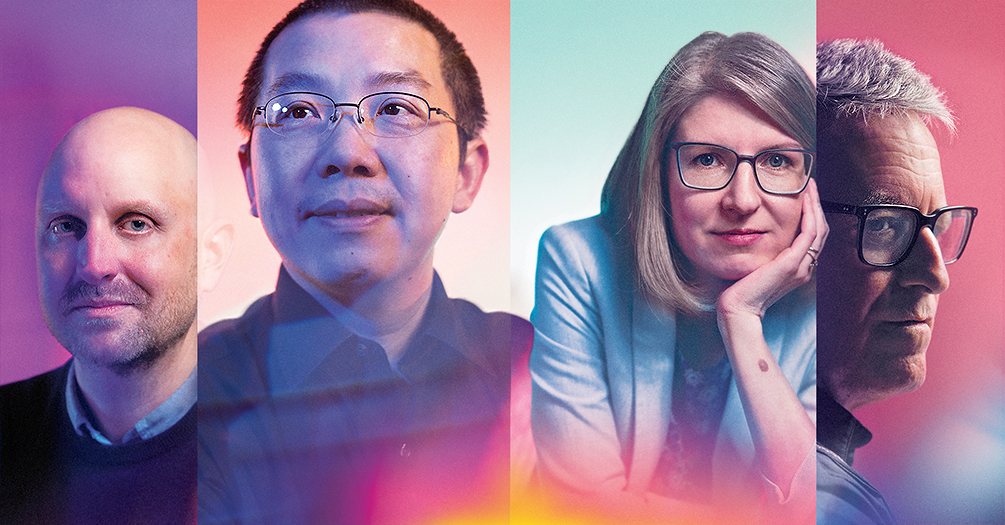
Undergraduate students receive instruction from graduate department faculty. Public Health 370 is led by Carrie Karvonen-Gutierrez, associate professor of Epidemiology. Students learn how diseases develop and spread, covering both infectious diseases that can quickly move through communities and chronic conditions that develop over time.
To Karvonen-Gutierrez, teaching students in the undergraduate program is an honor and privilege. She finds them to be incredibly bright, motivated and engaged—and so much fun to teach.
“They think deeply about the content, ask interesting and curious questions, and are passionate about transforming their training and knowledge into making the world a more just, healthful place,” Karvonen-Gutierrez said.
“It is a delight to observe students’ growth as they discover public health to be their disciplinary home, welcoming their varied experiences, interests and passions. Nothing makes me more proud and joyful than receiving emails from past students sharing exciting news—admission to medical school or graduate school, landing that dream job they didn’t even know existed.”
Youatt completed her MPH and PhD in Health Behavior and Health Education at Michigan Public Health and has an extensive instructional background. Her first teaching experiences were alongside Ken Warner, dean and professor emeritus. Youatt credits Warner with first recognizing the potential of undergraduate public health education at the school.
“Ken saw the national trend of undergraduate public health programs emerging,” she said. “He believed Michigan Public Health could not only participate, but lead.”
READ MORE about faculty, students, alumni and staff.
Expansion and impact
Looking forward, Youatt is eager to continue collaborating with faculty, staff and leaders across the school to expand undergraduate public health education beyond its current boundaries.
First up: Youatt will lead the school’s first study abroad program in Ireland in summer 2026. Launching this program represents more than just an international experience—it’s a strategic expansion of students’ understanding of global health systems.
“We want to provide students with opportunities to see public health in different contexts and to understand how environments and identities shape health outcomes outside of the United States,” she said.
With the school’s various departments taking the lead on creating new academic minors, these new academic pathways will offer more students at the University of Michigan the opportunity for a Life-Changing Education by engaging with public health concepts. These new minors are consistent with the program’s underlying mission: “To make public health matter for all.”
This means creating educational opportunities that reach beyond traditional boundaries, attracting students from across the university who might not have previously considered public health as a career path.
The program’s success isn’t just measured in classroom experiences but in tangible career outcomes. Approximately 95% of graduates are either employed or pursuing advanced degrees within six months of graduation, with 97% reporting satisfaction in roles they believe make a meaningful difference.
Aries Rutledge, BA ’19, MHSA ’23, said the undergraduate program prepared her to “handle the many unexpected challenges of working in public health.” She was named director of operations of gastroenterology at MedStar Health in the Washington, DC-Baltimore area in June.
SUPPORT research and engaged learning at Michigan Public Health.
Nothing makes me more proud and joyful than receiving emails from past students sharing exciting news—admission to medical school or graduate school, landing that dream job they didn’t even know existed.”
— Carrie Karvonen-Gutierrez, associate professor of Epidemiology
“I’m grateful I learned problem-solving skills during my undergrad career,” she said.
“It was a really impactful time for me—it solidified my decision to get my master’s
degree and go into health management.”
Reem Fawaz, BS ’23, who grew up in nearby Dearborn, said she first became interested in public health after taking an Introduction to Public Health course the summer after her freshman year.
“I knew I had finally found a field that combined many of my passions: public policy, law, science and health education,” said Fawaz, now a medical student at the Oakland University William Beaumont School of Medicine. “Public health can be as broad or as specific as you want—that’s the beauty of it. You can shape it to fulfill your purpose in ways that make sense to you.”
As awareness of public health continues to grow, Michigan Public Health’s undergraduate program stands ready to meet the moment.
“We’re not just training students,” Youatt said. “We’re creating a new generation of professionals who will imbue public health’s basic principles—using evidence-based decision-making, seeking community-led solutions, and striving for health equity—into whatever career field lies ahead.”